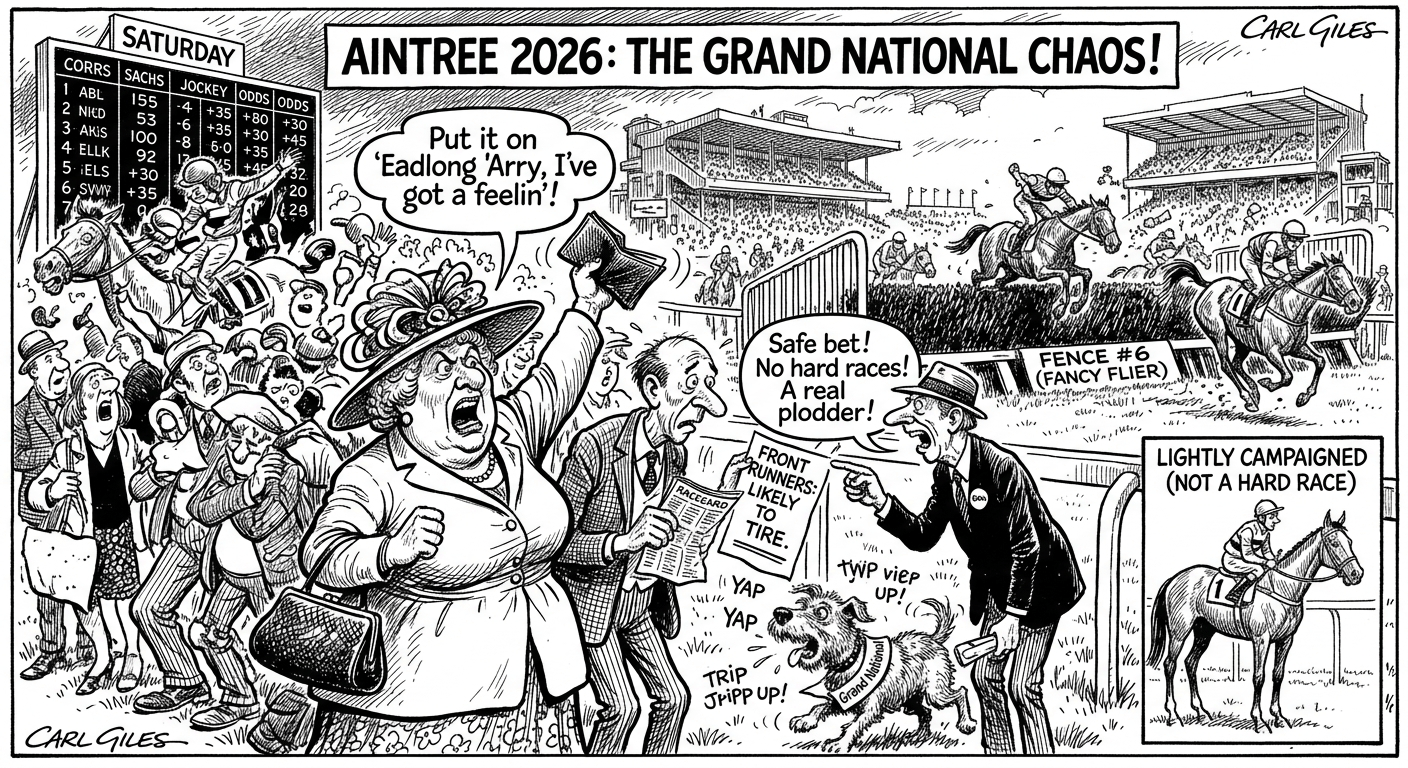
Welcome to the 2026 Grand National Meeting, three days of Liverpudlian glitter, questionable millinery choices, and the kind of sporting drama that makes even the most casual observer believe they can “read” a 34-runner handicap.
Running from Thursday, April 9 to Saturday, April 11, the Aintree Festival is the more relaxed, slightly louder cousin to Cheltenham. While Cheltenham is for the purists, Aintree is for the punters. Here is your witty (yet statistically clinical) guide to surviving the meeting.
While Saturday is the day for the office sweepstakes and people who think “Each-Way” is a brand of travel insurance, the Thursday and Friday of the Aintree meeting are where the real betting souls live.
It’s a 48-hour blur of Grade 1 prestige, Merseyside hospitality, and the distinct possibility of losing your shirt before the National even starts. Here is how to navigate the “Opening Day” and the legendary “Ladies Day” with your dignity, and perhaps your wallet, intact.
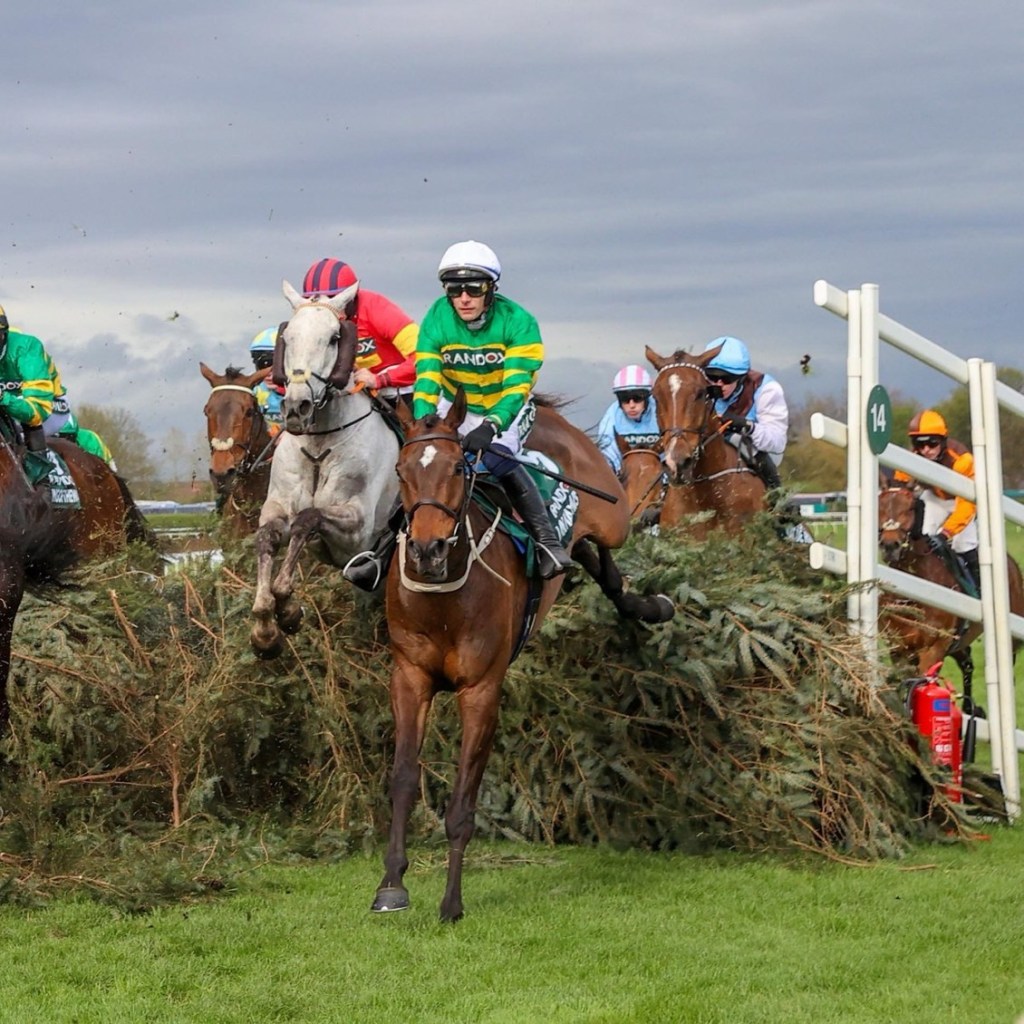
🐎 Thursday: The “Opening Day” (April 9, 2026)
Thursday is for the purists. It’s the day when horses that found Cheltenham a bit too “stressful” come to Liverpool to seek redemption.
The Highlight: The Aintree Bowl (2:55 PM)
Commonly known as the “Gold Cup Consolation Prize,” this race is often better than the actual Gold Cup because the horses aren’t terrified of the uphill finish. The Trend: Look for Jango Baie and Impaire Et Passe. Stats suggest that horses who ran in the Ryanair Chase or the Gold Cup but didn’t actually win often find the flat track of Aintree much more to their liking.
The Vibe: Serious. It’s all about the form. If you see someone in a tweed three-piece suit whispering to a bin man, they’re probably discussing the ground conditions.
The Wildcard: The Foxhunters’ Chase (3:30 PM)
This is the Grand National fences, but for amateur riders. It is essentially “The World’s Most Dangerous School Run.”
The Punter’s Tip: Experience is everything here. You want a horse like Barton Snow or Its On The Line, beasts that have jumped these fences before and jockeys who have a day job but a very high pain threshold.
🥂 Friday: “Ladies Day” (April 10, 2026)
Friday is a unique ecosystem. It is a kaleidoscope of neon fascinators, fake tan, and some of the highest-quality chasing you will see all season.
The Class Act: The Melling Chase (3:30 PM)
This is the “Speedster’s Derby.” It’s over 2 miles and 4 furlongs, which is the horse racing equivalent of a middle-distance sprint.
The Front-Runner: Grey Dawning is the one to watch. The stat to remember here is “Freshness.” At this stage of the season, a horse that bypassed the grueling festivals in March is like a sprinter who’s been on a spa retreat while everyone else was doing CrossFit.
The Trend: Since 2013, 80% of winners had finished in the top three on their previous start. Consistency isn’t just a virtue; it’s a betting strategy.
The Chaos: The Topham Chase (4:05 PM)
If you like the Grand National but wish it was over faster and involved more shouting, the Topham is for you. It’s over the National fences, but at a suicidal pace.
Course Specialists: Horses like Madara and Gentleman De Mee are the types to look for. You need a “bold” jumper, one that treats the fences like a minor inconvenience rather than a life-altering event.
The “Weight” Factor: Unlike the big race on Saturday, the Topham is often won by horses carrying a bit more class. Don’t be afraid of the top-weights; they are usually there because they are actually good at jumping.
📉 Statistical Truths for the Mid-Week
1. The Cheltenham Hangover: Be wary of horses that had “gut-wrenching” battles at Cheltenham three weeks ago. If they look tired in the paddock, they are tired. Aintree rewards the “Handy & Happy”—horses coming in fresh.
2. The Mullins Factor: As usual, Willie Mullins will likely bring half of Ireland with him. However, the “Aintree Mullins” is different from the “Cheltenham Mullins.” He often uses this meeting to let his second-string stars shine.
3. Flat vs. Hill: Aintree is flat as a pancake. Horses that “stuck on” at Cheltenham often find themselves outpaced here. Look for “speedy” profiles rather than “plodders.”
📅 The Three-Day Lay of the Land
Day 1: Opening Day (Thursday),The day for the serious “heads.” Four Grade 1 races, including the Aintree Bowl. It’s the day we find out which horses were actually tired after Cheltenham and which were just pretending.
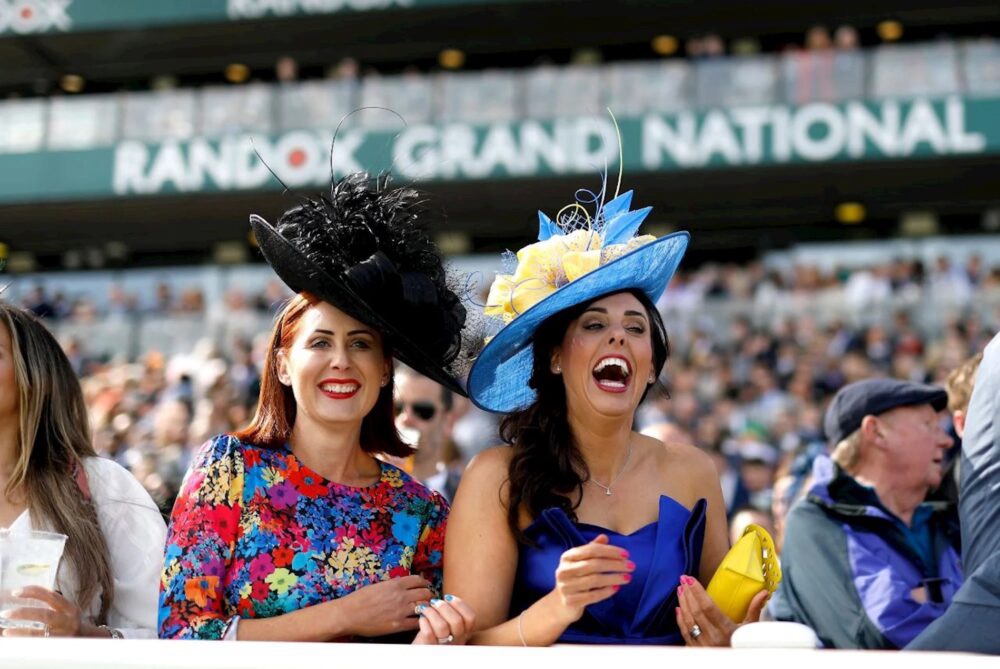
Day 2: Ladies Day (Friday), Officially about fashion; unofficially about the Melling Chase. Expect high heels, higher expectations, and the traditional photo of someone eating a burger in a £500 dress.
Day 3: Grand National Day (Saturday), The main event at 4:00 PM. The world stops for about nine minutes, 30 fences, and 4\ 1/4 miles of organized chaos.
📊 The “Golden Goose” Statistics
If you want to sound like an expert at the bar, ignore the horse’s name and focus on the cold, hard numbers. Modern trends have turned the National from a “lottery” into a very specific puzzle.
1. The Sweet Spot (Age & Weight)
Age: 10 of the last 11 winners were aged 7 to 9. The “Old Guard” (11+) has largely been put out to pasture by a faster, classier modern race.
Weight: Look for the “Middleweights.” 9 of the last 11 winners carried between 10st 5lb and 11st 8lb. Carrying 12st over 30 fences is essentially like trying to run a marathon with a small child on your back.
2. The “Hard Race” Fallacy
Conventional wisdom says a horse needs to be “battle-hardened,” but the stats suggest otherwise.
The Campaign: 9 of the last 11 winners had no more than 6 runs that season.
Freshness: You want a horse that is fit but not “cooked.” 9 of the last 11 winners had their last run within 16 to 42 days of the National. If they haven’t run since Christmas, they’ll lack “match fitness”; if they ran a grueling race 10 days ago, their legs will turn to jelly at the Elbow.
3. The Front-Runner vs. The Closer
Front-Runners: Historically, trying to lead the Grand National from start to finish is a suicide mission. However, since the fences were softened in 2013, “prominent” racers (those in the first 6-8) have fared much better.
The Closer: Coming from the very back is a nightmare. With 34 runners, the amount of “traffic” is worse than the M6 on a Bank Holiday. You want a horse that sits handy, close enough to see the lead, but far enough back to let someone else do the wind-breaking.
The final field for the 2026 Grand National (taking place Saturday, April 11) is currently limited to a maximum of 34 runners.
While the “Final Declaration” stage (the 48-hour stage) technically occurs on Thursday, April 9, the list below reflects the confirmed top 34 as of the most recent scratchings. Note that Spillane’s Tower has reportedly been diverted to the Bowl Chase, which has allowed Pied Piper to move into the top 34.
🏗️ The Tale of Two Circuits
Most people think “Aintree” and see the Grand National fences. In reality, the meeting uses two very different tracks for the chase races.
1. The National Course (The Big One)
Circumference: 2 miles, 2 furlongs.
The Shape: Triangular. The apex is at the Canal Turn, which is the furthest point from the stands.
The Run-In: A brutal 494 yards from the final fence to the line, featuring “The Elbow.” This is where dreams, and betting slips, are famously shredded.
The Fences: 16 spruce-covered obstacles (30 jumped in total). Unlike the standard orange-and-white birch fences elsewhere, these are unique to Aintree.
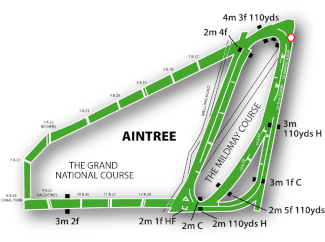
2. The Mildmay Course (The Sharp One)
The Shape: Rectangular and tight.
The Style: This is used for the non-National chase races (like the Bowl and the Melling Chase).
The Key Stat: It favors “handy” types. Because the bends are so sharp, horses that need half a mile to get into top gear (long-striders) struggle. You want a horse that can corner like a Mini Cooper, not a freight train.
🚧 Notorious Obstacles: By the Numbers
If a horse can’t jump, they’re just expensive lawnmowers. Here is what they are facing:
The Chair (Fence 15): The tallest at 5ft 2in. It has a 6ft open ditch on the take-off side and the landing side is actually higher than the take-off. It’s a mental and physical mountain.
Becher’s Brook (Fence 6 & 22): Standing at 4ft 10in, its danger lies in the 10-inch drop on the landing side. Horses don’t expect the floor to disappear.
Canal Turn (Fence 8 & 24): A 5ft fence followed immediately by a sharp 90-degree left turn. Jockeys who try to take the shortest route (jumping it at an angle) are the ones with nerves of steel.
⚠️ The “Cheltenham Factor”
The most important stat for the three-day meeting is the 25-day gap.
Avoid: Horses that had a “hard race” (beaten by less than 2 lengths in a grueling finish) at the Cheltenham Festival.
Target: The “Fresh Blood.” Look for horses that either bypassed Cheltenham entirely or “cruised” to a finish without being emptied. Aintree is a flat, fast track; a horse with “heavy legs” will be left behind when the sprinting starts at the 2-furlong pole.
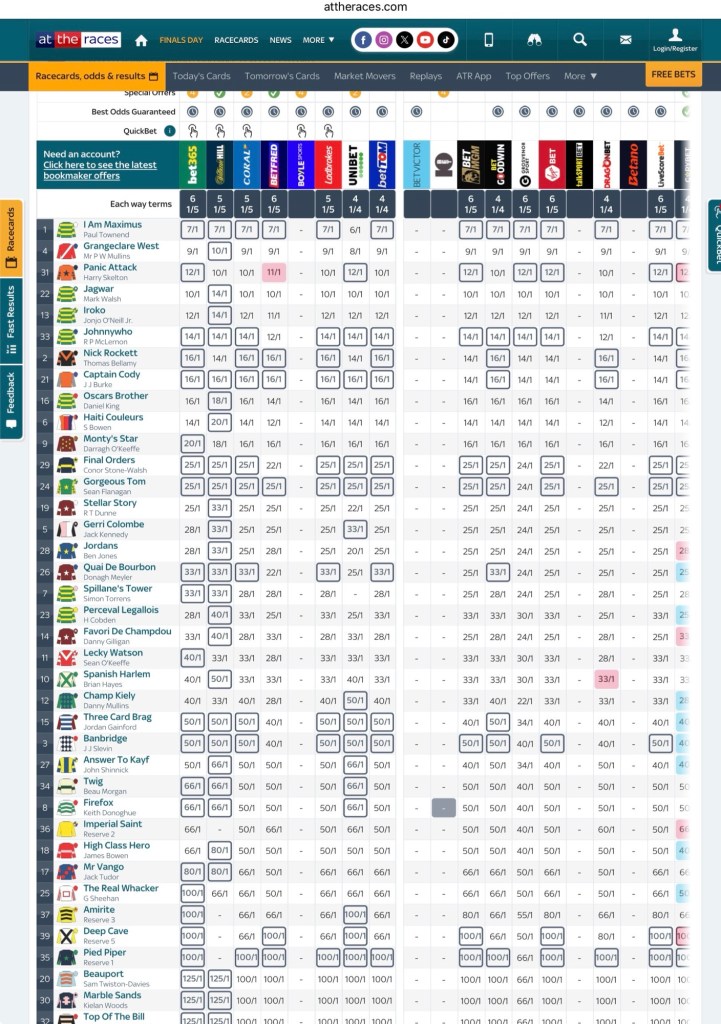
Expected 2026 Grand National Runners
Jockeys are being confirmed throughout the week; TBC indicates the rider is not yet officially declared for the Saturday race.
2026 Grand National Runners & Jockeys
1. I Am Maximus (Willie Mullins) — Paul Townend
2. Nick Rockett (Willie Mullins) — Patrick Mullins
3. Banbridge (Joseph O’Brien) — JJ Slevin
4. Grangeclare West (Willie Mullins) — Brian Hayes
5. Gerri Colombe (Gordon Elliott) — Jack Kennedy
6. Haiti Couleurs (Rebecca Curtis) — Sean Bowen
7. Firefox (Gordon Elliott) — Sam Ewing
8. Monty’s Star (Henry de Bromhead) — Darragh O’Keeffe
9. Spanish Harlem (Willie Mullins) — Danny Mullins
10. Lecky Watson (Willie Mullins) — Sean O’Keeffe
11. Champ Kiely (Willie Mullins) — TBC
12. Iroko (Greenall & Guerriero) — Jonjo O’Neill Jr.
13. Favori De Champdou (Gordon Elliott) — Jordan Gainford
14. Three Card Brag (Gordon Elliott) — TBC
15. Oscars Brother (Connor King) — Daniel King
16. Mr Vango (Sara Bradstock) — Jack Tudor
17. High Class Hero (Willie Mullins) — TBC
18. Stellar Story (Gordon Elliott) — TBC
19. Beauport (Nigel Twiston-Davies) — Sam Twiston-Davies
20. Captain Cody (Willie Mullins) — Harry Cobden
21. Jagwar (Greenall & Guerriero) — Mark Walsh
22. Perceval Legallois (Gavin Cromwell) — Sean Flanagan
23. Gorgeous Tom (Henry de Bromhead) — TBC
24. The Real Whacker (Patrick Neville) — Brian Hughes
25. Quai De Bourbon (Willie Mullins) — TBC
26. Answer To Kayf (Terence O’Brien) — John Shinnick
27. Jordans (Joseph O’Brien) — TBC
28. Final Orders (Gavin Cromwell) — Conor Stone-Walsh
29. Marble Sands (Killahena & McPherson) — Kielan Woods
30. Panic Attack (Dan Skelton) — Harry Skelton
31. Top Of The Bill (Nigel Twiston-Davies) — Toby McCain-Mitchell
32. Johnnywho (Jonjo O’Neill) — Richie McLernon
33. Twig (Ben Pauling) — Beau Morgan
34. Pied Piper (Gordon Elliott) — TBC
Reserves (In Order)
• Imperial Saint (35)
• Amirite (36)
• Ain’t That A Shame (37)
• Yeah Man (38)
I Am Maximus is the current market favorite, looking to reclaim the title he won in 2024. Keep an eye on Jagwar and Iroko, both of whom have seen significant market support since the weights were released.
Note I will keep adding to the blog each morning 🌅
18+ only. Betting involves risk and losses are inevitable. Never gamble more than you can afford to lose and do not view betting as a way to make money. If gambling stops being enjoyable or becomes a concern, seek help
 Silks and Shenanigans